The right fit
Share drawings, available space, handling interfaces and the item you need to protect.
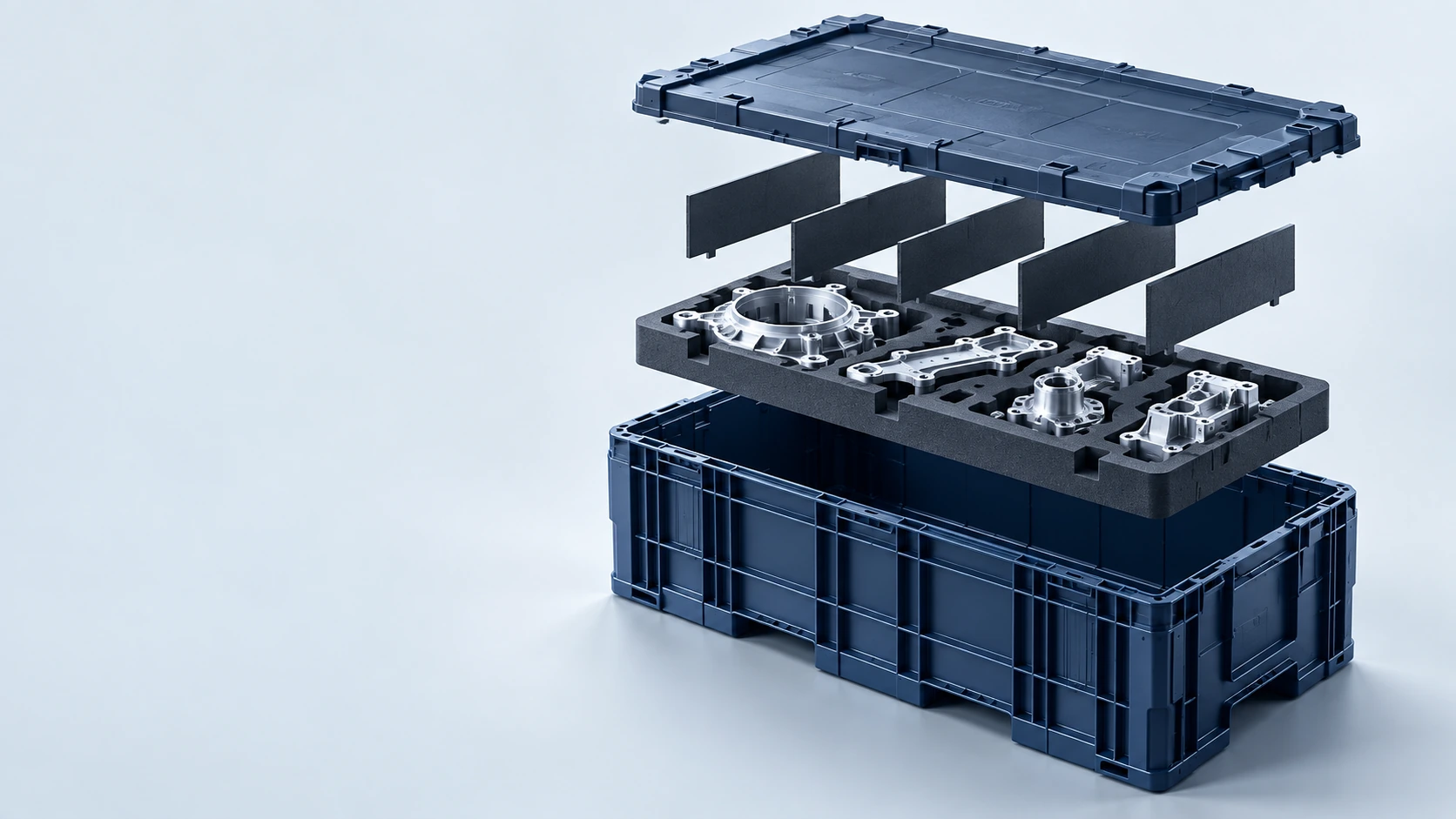
Custom solutions.
From the outside in.
Explore fitted inserts and dividers around the shape, contact surfaces and protection your components need.
Part fit / separation / protectionA proposed project-review sequence, from the first requirement to an agreed production plan. Select a step to see what to bring to the conversation.
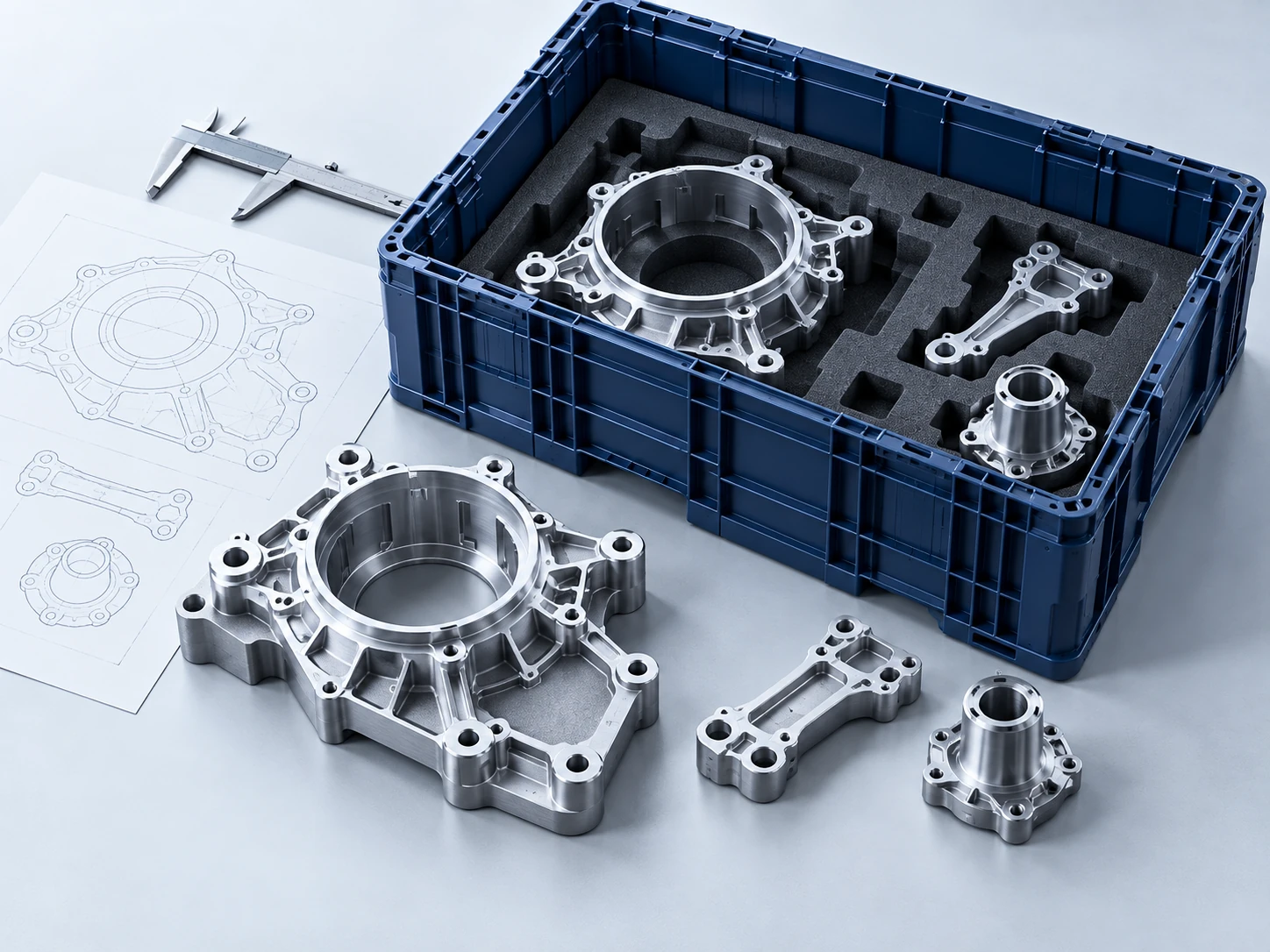
Review the part or payload, handling method, available space and quantity.
Three projects from our company archive. Different handling needs, with design decisions shaped around the application.
A drawing helps. So does a clear description of what the packaging needs to do.
Share drawings, available space, handling interfaces and the item you need to protect.
Describe temperature, cleaning, contact materials and any testing your project requires.
Include order quantity, stacking, return transport, identification and accessory requirements.
Keep the project decisions in one place. A useful brief separates confirmed requirements from assumptions, so the design discussion starts with the same information.
Identify the part or payload, its drawing revision and the quantity carried in each container. Mark surfaces that must not be touched, the required presentation and the space needed to load or remove the part. Separate fixed requirements from preferences that can be reviewed.
List which elements could use an existing format and which may need a new molded shape. Include the container, lid, insert and any mating parts in the discussion. Agree what is included in the design and tooling proposal, which drawings require approval, and how later changes will be recorded. Tooling feasibility, ownership, cost and timing require a project-specific agreement.
For each unresolved item, record the question, the information needed and who will confirm it. Keep the current drawing revision with that record. If the payload, interface or material requirement changes, review its effect on the design, sample checks and production plan before treating the change as approved.
Send a written summary through the inquiry form. After receiving your reference, email supporting drawings separately and include that reference in the subject.
Plan molded container sample approvalInclude a drawing or dimensions, the application, quantity and any material or testing requirements. Configuration, tooling, timing and feasibility need project review.
Request a QuotePrepare and review your project brief on this website.